Thursday, July 4, 2013

Two Peas in A Pod


Thursday, July 04, 2013             Two Peas in A Pod

 “But now we have been released from the law, for we died to it and are no longer captive to its power. Now we can serve God, not in the old way of obeying the letter of the law, but in the new way of living in the Spirit.”
Romans 7:6

The first century Christian church in Rome was primarily composed of Jews who had accepted Jesus as their Messiah. Because they were grounded in the theology of Old Testament Covenant law, the Apostle Paul labored hard in his letter to the church to distinguish between the Old and New Covenants.  Since most of us were not raised in a very legalistic religious setting, we may be tempted to dismiss Paul’s writings as not relevant to our lives. When Jews were striving to keep the Covenant law, they were working out the meaning of their lives. Their faithfulness to the law reinforced their belief that they were the people of God and thus affirmed their sense of well-being.

In our culture, we are taught to meet our needs for love, acceptance and self-worth through our own efforts, and our sense of well-being is affirmed through our achieving cultural standards, or measures of success. I believe we, and our first century brothers and sisters in Rome, are two peas in a pod, and thus Paul’s teaching on the basics of the Old Covenant relationship Israel had with God is as vital to us now as it was when Paul’s letter was first received in Rome. Paul wanted the church to know that God had been faithful to His part of the Covenant, and that God, out of an abundance of His mercy, fixed what was wrong, what was preventing Israel from keeping the Covenant. Paul wanted the church to see how God had established a New Covenant relationship with them. Paul believed that the church could not fully embrace the New Covenant without this knowledge. This knowledge would show the church that any effort by them to try and live by the Old Covenant would be futile. In the same way, any efforts on our part to work out the meaning of our life apart from God’s grace will be futile.

In Chapter 6, Paul described how a person enters into a New Covenant relationship with God. In Chapter 8, Paul will discuss the life in Christ of the New Covenant. Chapter 7 is a bridge, a transition between the two covenants and is summed up in Romans 7:6. My personal mission statement is “Seeking the Life in Christ as my way of life.” Using Paul’s words, I could say, “Seeking the new way of life in the Spirit as my way of life.”

(NOTE: In Romans 7:6, Paul introduces in one simple statement, the heart of the Christian’s life. A good resource for this is The Pressure’s Off, by Dr. Larry Crabb.)

Sē’lah 
<><  <><  <><  <><
(Selah is a word that appears in the Book of Psalms that I often use as the Complimentary Closing in my correspondence. Its meaning, as I use the word, is to pause and think about these things.)

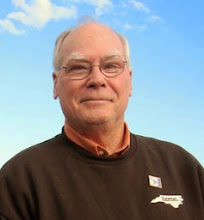
These meditations are written by Alex M. Knight as he seeks the life in Christ as his way of life.  In addition to this BLOG they are distributed on the Constant Contact email server. You may subscribe to this email service by sending an email to: amkrom812@gmail.com. The BLOG is also available on Amazon Kindle, by subscription

Publications by Alex M. Knight:

·        Seeking the Life in Christ, Meditations on the New Testament and Psalms has been published and is now available at Amazon.com. The Kindle version will follow soon.

·        The second edition First Think – Then Pray has been released as an e-book on Amazon Kindle.

·        Meditations on The Story of My Life as told by Jesus Christ has been released as an e-book on Amazon Kindle.

Wednesday, July 3, 2013

Alive to God in Christ Jesus


Wednesday, July 03, 2013         Alive to God in Christ Jesus

“So you also must consider yourselves dead to sin and alive to God in Christ Jesus.”
Romans 6:11

I don’t think the phrase consider yourselves, quite captures the power of Paul’s teaching in Romans 6. The KJV uses the word ‘reckon’ which comes closer. The root of the Greek word Paul used is an accounting term for calculating the total, or sum of something. When a shop owner closes for the day, the cash register is emptied and counted. The day’s income is calculated, or reckoned. The total income was already a fact before the shop owner counted the money. The money was already in the register. Counting the money only reveals to the shop owner what is already true.

Paul is urging the followers of Christ to reckon what Christ has already accomplished for his people. Remember, what is true for Jesus, is true for his people. Jesus has conquered the power of sin and death, so also Christianoi, the people of Christ, as the first Christians were known.

Paul uses the metaphor of baptism because it is a good way to illustrate what is true. In Chapter 6, Paul was not referring to the water baptism we receive when we join the church; rather this is the baptism by the Holy Spirit, into the life of Christ, when the believer makes their confession of faith. Paul is teaching that anyone who belongs to Christ has become a new person. The old life is gone, a new life has begun! He uses baptism to help us understand that we have died with Christ, and we have been raised to new life in Christ.

Paul is urging the followers of Christ to live out of their new identity as the beloved children of God, as Jesus’ people. Just as Joshua called the people of Israel to “choose you this day whom ye will serve” (Joshua 24:15 KJV), Paul is calling the people of Jesus to remember who they are and to live out of that reality.

When my teenage children would leave the house for an evening out, my parting words to them were, “Remember who you are.” They knew I was reminding them they were the beloved children of God, and to behave accordingly. When Martin Luther was feeling pulled by temptation he would shout, “I am baptized!” That was his way of reminding himself he belonged to Jesus, and it helped him exercise integrity at the moment of decision. The phrase, ‘exercise integrity at the moment of decision’, is embedded in me, and is what I use to remind myself to live out of the truth of my core identity: I am a child of God.

What helps you choose each day to live out of the reality of your new life in Christ? To help you process that question, I suggest you read the entire sixth chapter of Romans. Read it in different translations, and include my favorite translation of Romans 6, The Message.
  
Sē’lah
<><  <><  <><  <><
(Selah is a word that appears in the Book of Psalms that I often use as the Complimentary Closing in my correspondence. Its meaning, as I use the word, is to pause and think about these things.)

These meditations are written by Alex M. Knight as he seeks the life in Christ as his way of life.  In addition to this BLOG they are distributed on the Constant Contact email server. You may subscribe to this email service by sending an email to: amkrom812@gmail.com. The BLOG is also available on Amazon Kindle, by subscription

Publications by Alex M. Knight:

·        Seeking the Life in Christ, Meditations on the New Testament and Psalms has been published and is now available at Amazon.com. The Kindle version will follow soon.

·        The second edition First Think – Then Pray has been released as an e-book on Amazon Kindle.

·        Meditations on The Story of My Life as told by Jesus Christ has been released as an e-book on Amazon Kindle.
Tuesday, July 2, 2013

Live in Triumph Over Sin and Death


Tuesday, July 02, 2013      Live in Triumph Over Sin and Death

“For the sin of this one man, Adam, caused death to rule over many. But even greater is God’s wonderful grace and his gift of righteousness, for all who receive it will live in triumph over sin and death through this one man, Jesus Christ.”
Romans 5:17

In Romans 5: 12-21, the Apostle Paul deals head on with two of the most crucial doctrines of the Christian Faith: Original Sin and Atonement. Original sin deals with who needs to be saved, and atonement deals with who gets saved.

Paul argues that Adam’s legacy to the entire world is that all people have sinned and fallen short of the glory of God. There have always been some dissenting views that Adam’s sin is not inherently passed on to each generation.  However, this view was not widely accepted until the Age of Enlightenment. Since then, the dominate worldview of secular Western culture has replaced the concept of original sin and embraced the belief that humanity is not inherently at odds with God. This worldview believes that to the extent some in society are bad, they can be fixed through better education and through forming good habits. Nevertheless, the core of the Christian faith is that because of original sin, all people stand in need of a savior.

There are some who say the saving work of Christ is universal, and thus all people are already saved, even if they do not know of or accept their salvation. Others say that the saving work of Christ is predestined, or limited, to only those elected, or chosen by God. However, the majority of Christian churches teach that while the saving work of Christ is universal, in that all can be saved, a person must ask God in faith for forgiveness in order to be saved. Five times between verse 15-17, Paul uses the word ‘gift’ to describe God’s grace. Reconciliation with God is neither a right, nor can it be earned. Right standing with God is a gift from God, which is received through faith in what Christ has done to set us free from sin and death: “Therefore, since we have been made right in God’s sight by faith, we have peace with God because of what Jesus Christ our Lord has done for us. Because of our faith, Christ has brought us into this place of undeserved privilege where we now stand, and we confidently and joyfully look forward to sharing God’s glory” (Romans 5:1-2).

The concluding verses in this chapter help us know that God’s gift is sufficient to make us complete in Christ. That is, we are saved for all eternity; we don’t drift in and out of a state of grace based on our good behavior, or lack thereof:

“. . . all who receive it will live in triumph over sin and death through this one man, Jesus Christ . . . but Christ’s one act of righteousness brings a right relationship with God and new life for everyone . . .  many will be made righteous . . . now God’s wonderful grace rules instead, giving us right standing with God and resulting in eternal life through Jesus Christ our Lord” (Romans 5:17-21, selected verses, emphasis mine).


Sē’lah

<><  <><  <><  <><
(Selah is a word that appears in the Book of Psalms that I often use as the Complimentary Closing in my correspondence. Its meaning, as I use the word, is to pause and think about these things.)

These meditations are written by Alex M. Knight as he seeks the life in Christ as his way of life.  In addition to this BLOG they are distributed on the Constant Contact email server. You may subscribe to this email service by sending an email to: amkrom812@gmail.com. The BLOG is also available on Amazon Kindle, by subscription

Publications by Alex M. Knight:

·        Seeking the Life in Christ, Meditations on the New Testament and Psalms has been published and is now available at Amazon.com. The Kindle version will follow soon.

·        The second edition First Think – Then Pray has been released as an e-book on Amazon Kindle.

·        Meditations on The Story of My Life as told by Jesus Christ has been released as an e-book on Amazon Kindle.

Monday, July 1, 2013

Friends of God


Monday, July 01, 2013               Friends of God

“But God put his love on the line for us by offering his Son in sacrificial death while we were of no use whatever to him.”
Romans 5:8 The Message

In the Kingdom to come, when I get an opportunity to talk with the Apostle Paul, one of the questions I want to ask him is how he worked out his faith in the divinity of Christ. He doesn’t say much about how he got to this place in his writings, but it is clear that Paul’s faith was grounded in God being fully present in Christ. Returning again to the supremacy of Christ we can see Paul’s faith on display: “Christ is the visible image of the invisible God. . . He existed before anything was created and is supreme over all creation. For God in all his fullness was pleased to live in Christ, and through him God reconciled everything to himself” (Colossians 1:15-20, selected verses). Meditating on this passage is helpful to fully appreciate what Paul is saying in Romans 5:8.

I like the rendering of Romans 5:8 in Eugene Peterson’s translation, The Message, because it identifies three essential principles of our life in Christ. First, God’s grace for us is risky. As Jesus pointed out in the parable of the lost sheep (Luke 15), the 99 sheep were left alone in the field while the shepherd went to look for the one lost sheep. God made Himself vulnerable by loving us, because we are free to refuse, to reject His love for us.

The second principle Paul identifies is the divinity of Christ. It is God’s love that is put on the line through the sacrificial death of Jesus, because as Paul states in Colossians 1:19, “all (God’s) fullness was pleased to live in Christ.” Often I have heard people complain that God is mean because He sent His son Jesus to die for us. If that were the case, I might agree with them. But God did not send someone else to do His bidding. It was God Himself who went to the cross for us while we were still sinners.

That we were still sinners when Christ died for us, or as Peterson puts it, “while we were of no use whatever to” God, is the third principle. In Romans 2:16, Paul makes the case “that the day is coming when God, through Christ Jesus, will judge everyone’s secret life.” For those unprepared for this Day of Judgment, this notion causes fear. But those who “have been made right in God’s sight by faith” (Romans 5:1) “can rejoice in our wonderful new relationship with God because our Lord Jesus Christ has made us friends of God” (Romans 5:11). WOW! From sinners who were of no use whatever to God, to friends of God, all made possible because God showed his great love for us by sending Christ to die for us.
  
Sē’lah
<><  <><  <><  <><
(Selah is a word that appears in the Book of Psalms that I often use as the Complimentary Closing in my correspondence. Its meaning, as I use the word, is to pause and think about these things.)

These meditations are written by Alex M. Knight as he seeks the life in Christ as his way of life.  In addition to this BLOG they are distributed on the Constant Contact email server. You may subscribe to this email service by sending an email to: amkrom812@gmail.com. The BLOG is also available on Amazon Kindle, by subscription

Publications by Alex M. Knight:

·        Seeking the Life in Christ, Meditations on the New Testament and Psalms has been published and is now available at Amazon.com. The Kindle version will follow soon.

·        The second edition First Think – Then Pray has been released as an e-book on Amazon Kindle.

·        Meditations on The Story of My Life as told by Jesus Christ has been released as an e-book on Amazon Kindle.